Most product teams optimize for what they can measure. The problem is, a lot of what matters is not measurable.
Most product teams optimize for what they can measure. The problem is, a lot of what matters is not measurable.
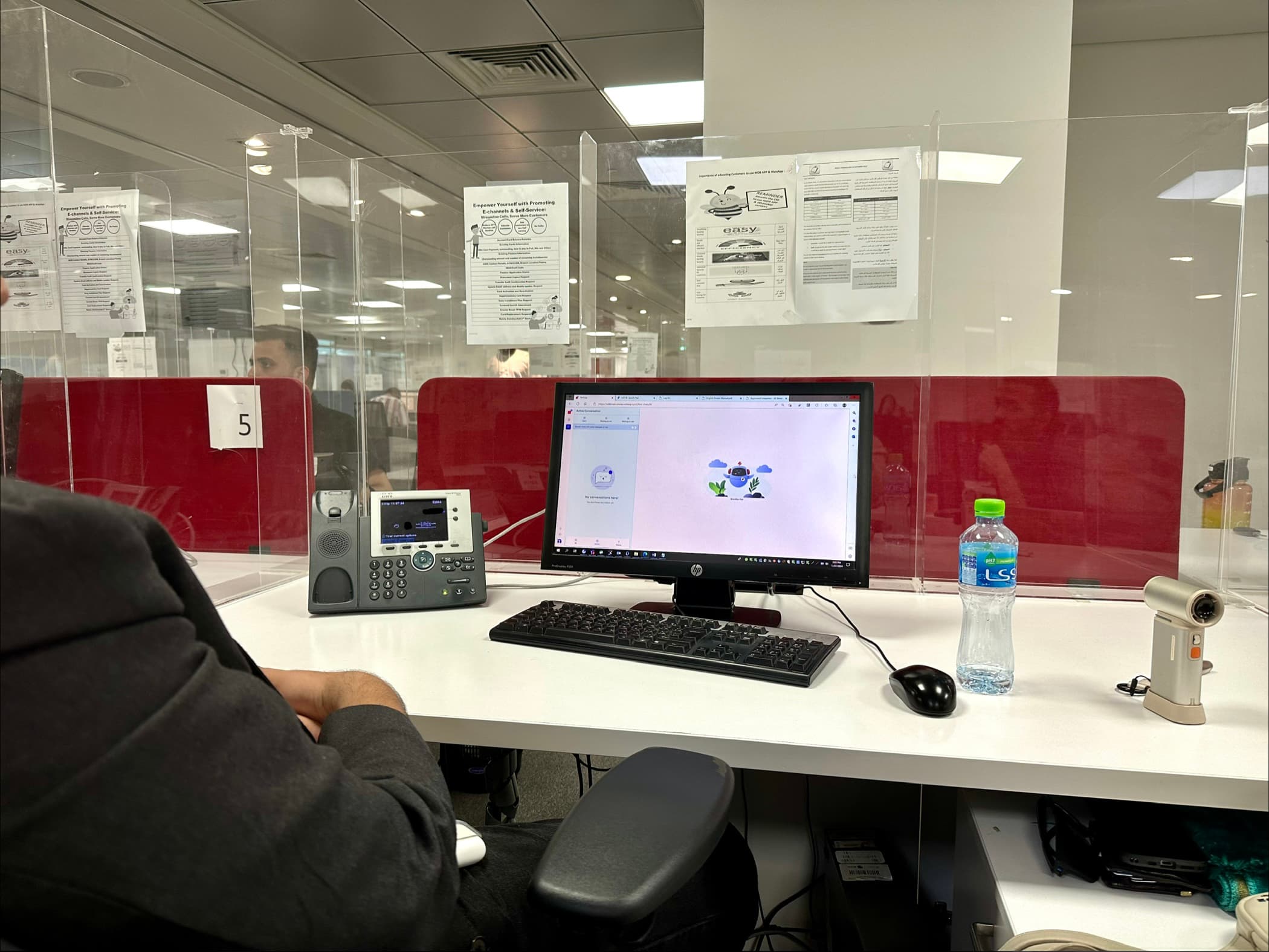
I went on a research trip to one of the largest banks in the UAE some time back. We were sitting with one of the agents, watching the day unfold as it normally does. Multiple conversations open at once. Different customer issues arriving in parallel. Some straightforward, some emotionally charged, some already escalated in tone before the agent had even properly entered the interaction.
From the outside, this environment is easy to reduce to operations. Tickets, queues, SLAs, scripts, compliance. It all looks structured and measurable.
But that framing misses the core of the job.
What the system is really asking is not just problem-solving. It is emotional regulation at scale.
And most products are not designed for that.
The visible workflow is only half the system
If you were looking at this through a dashboard, you would describe it in clean metrics. Conversations handled. Resolution time. Escalation rate. CSAT.
All useful. All incomplete.
Sitting with the agent makes the hidden layer obvious.
Every interaction starts with some level of friction. Frustration, confusion, impatience. The agent has to understand the issue, navigate the system, stay compliant, and reset the tone of the conversation, repeatedly, without carrying too much of the previous one into the next.
That last part is nowhere in the system design.
But it is central to the job.
Most enterprise products optimize for task completion. They largely ignore the cost of repeatedly performing that task under pressure.
Small interventions matter when they change how the work feels
Some time before that visit, we had added a small meditation animation to the conversation screen.
It was not a strategic feature.
It did not improve any core metric.
In most roadmap discussions, it would be dismissed as cosmetic.
I assumed it would be ignored.
But during the visit, the agent brought it up on their own.
They use it in moments where things pile up. Not always. Not consciously every time. But enough for it to matter. It gives them a brief reset before the next interaction.
Nothing dramatic. Just a pause.
Now if someone asks me to quantify this, I do not think I will be able to. It does not show up cleanly in any metric. But somewhere, silently, it works. It pays off. It creates impact. It adds value, even if that value is not easy to measure.
That changed how I think about product value.
Not everything that matters will move a dashboard.
Product teams undervalue what they cannot defend in a metric
This is where most teams get it wrong.
If something cannot be tied directly to time saved, revenue generated, or cost reduced, it gets deprioritized. Labeled as polish. Nice to have.
That logic breaks in high-intensity systems.
Because performance is not just about efficiency. It is also about sustainability.
Fatigue affects accuracy.
Stress affects judgment.
Repetition without recovery affects consistency.
A system can be operationally efficient and still degrade performance over time if it ignores the human cost of using it.
Most teams know this at some level. They just do not prioritize it because it is harder to justify in a roadmap review.
Enterprise products run on people, not just workflows
One thing becomes very clear in the field.
The workflow is not just steps on a screen. It is something a person carries through the day.
Between conversations. Between escalations. Between moments of pressure.
When products ignore that layer, they create systems that look efficient but feel heavy to operate.
And over time, that shows up.
In errors.
In slower recovery.
In inconsistent service.
In quiet burnout that never gets attributed to the product.
What looks small in design can be large in impact
The lesson was not that meditation animations are important.
The lesson was that we were missing a part of the problem.
The system was asking agents to do emotionally expensive work all day. Almost nothing in the interface acknowledged that.
Once you see that clearly, your priorities shift.
You stop asking only:
How fast can someone move through this workflow?
You start asking:
What state does this workflow leave them in after repeated use?
That is a harder question. But it is the one that actually determines long-term performance.
The gap between measurable value and lived value is where good products are built
Most organizations optimize for what they can measure. That is necessary.
But a lot of product quality sits outside that layer.
In reduced cognitive load
In faster emotional recovery
In clarity under pressure
In small moments that make the system feel supportive instead of extractive
These are harder to quantify. But they compound.
The teams that understand this do not build softer products. They build more resilient ones.
The takeaway
What stayed with me from that bank trip was not a broken workflow.
It was a quiet realization.
We had added something small, assuming it would not matter much. In practice, it did. Because it acknowledged a part of the job the system otherwise ignored.
That is the kind of insight you do not get from a dashboard.
You get it by watching real work happen.
And by paying attention to what the system is not designed for, but still demands.
Great products do not just reduce effort. They reduce what people have to silently carry.